Automotive
Vehicles of all types — OEM, aftermarket, and specialty.
Examples: Cars, motorcycles, camper vans, boats, racing parts, body kits.
22 apps
The automotive industry has embraced browser-based 3D configurators as a core part of the digital sales journey. From mass-market brands to luxury marques, car manufacturers use interactive 3D tools to let buyers customize paint colors, wheel designs, interior trims, and optional packages — all rendered in real time directly in the browser.
These configurators reduce the need for physical showroom visits, cut print-catalog costs, and give customers confidence in their choices before placing an order. The best automotive configurators combine photorealistic rendering with smooth performance even on mobile devices, creating an experience that rivals a dealership walkthrough.
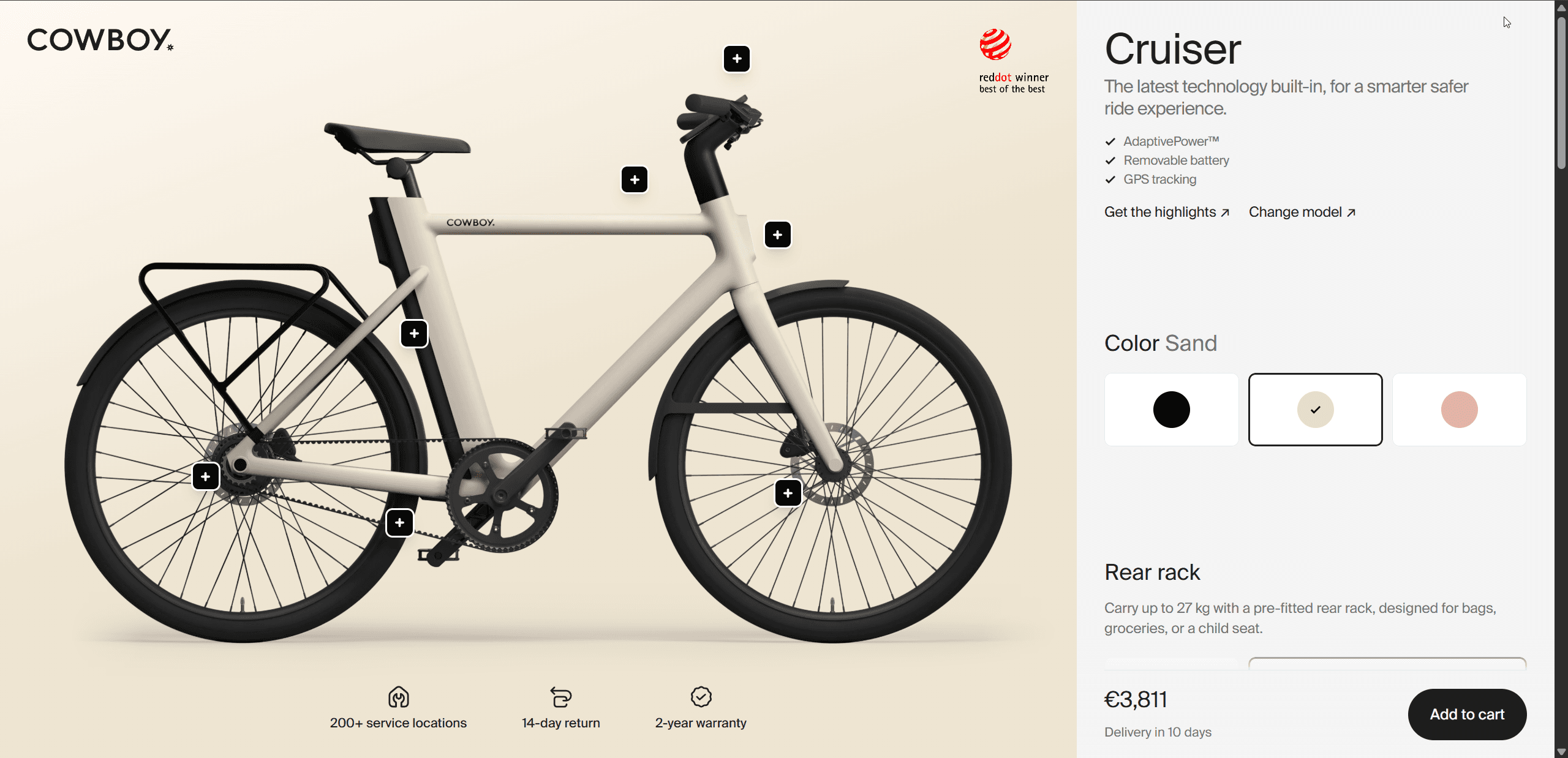
Cowboy Electric Bike 2D Configurator
 Cowboy
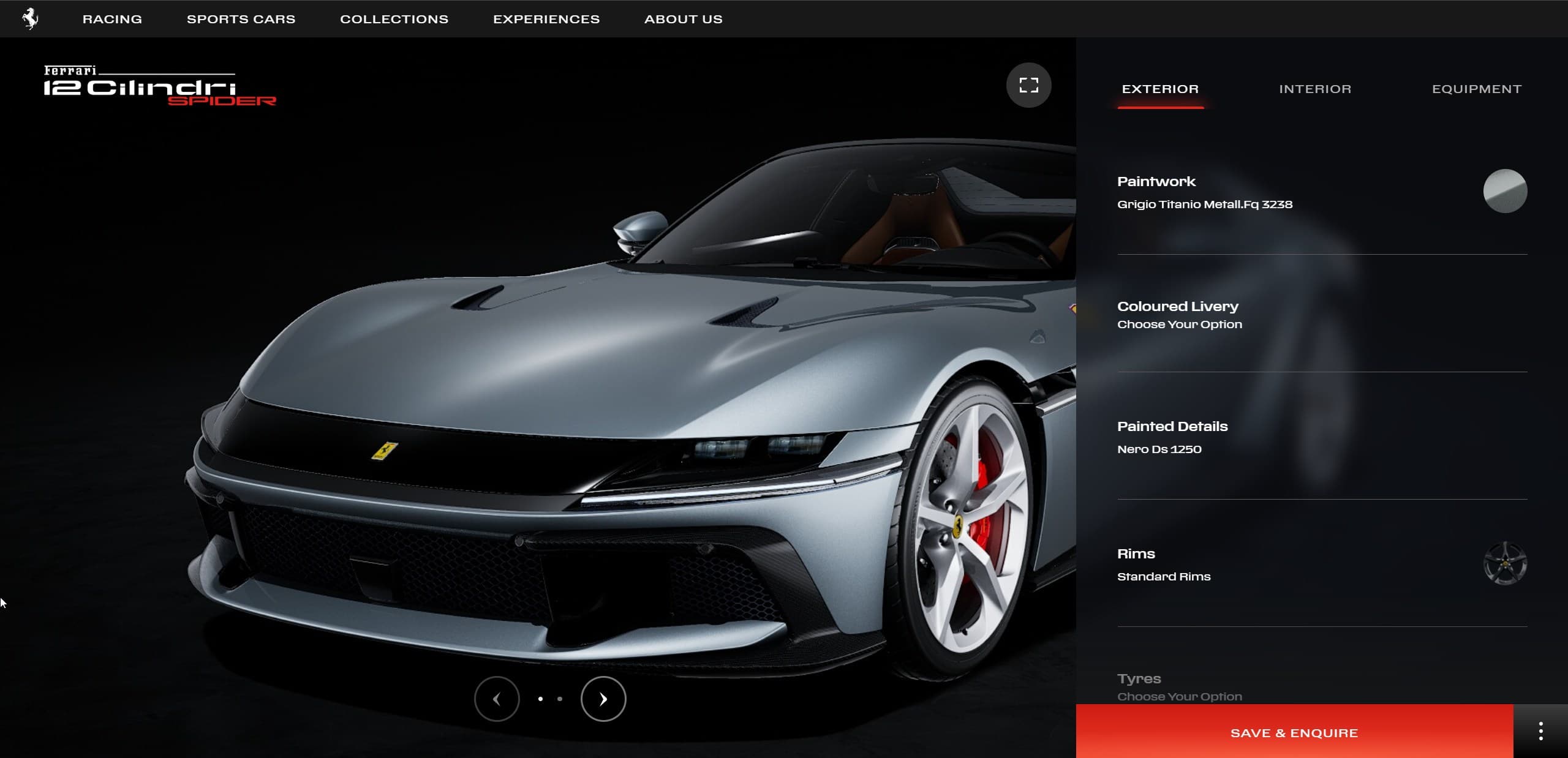
Ferrari Car 2D Configurators
 Ferrari
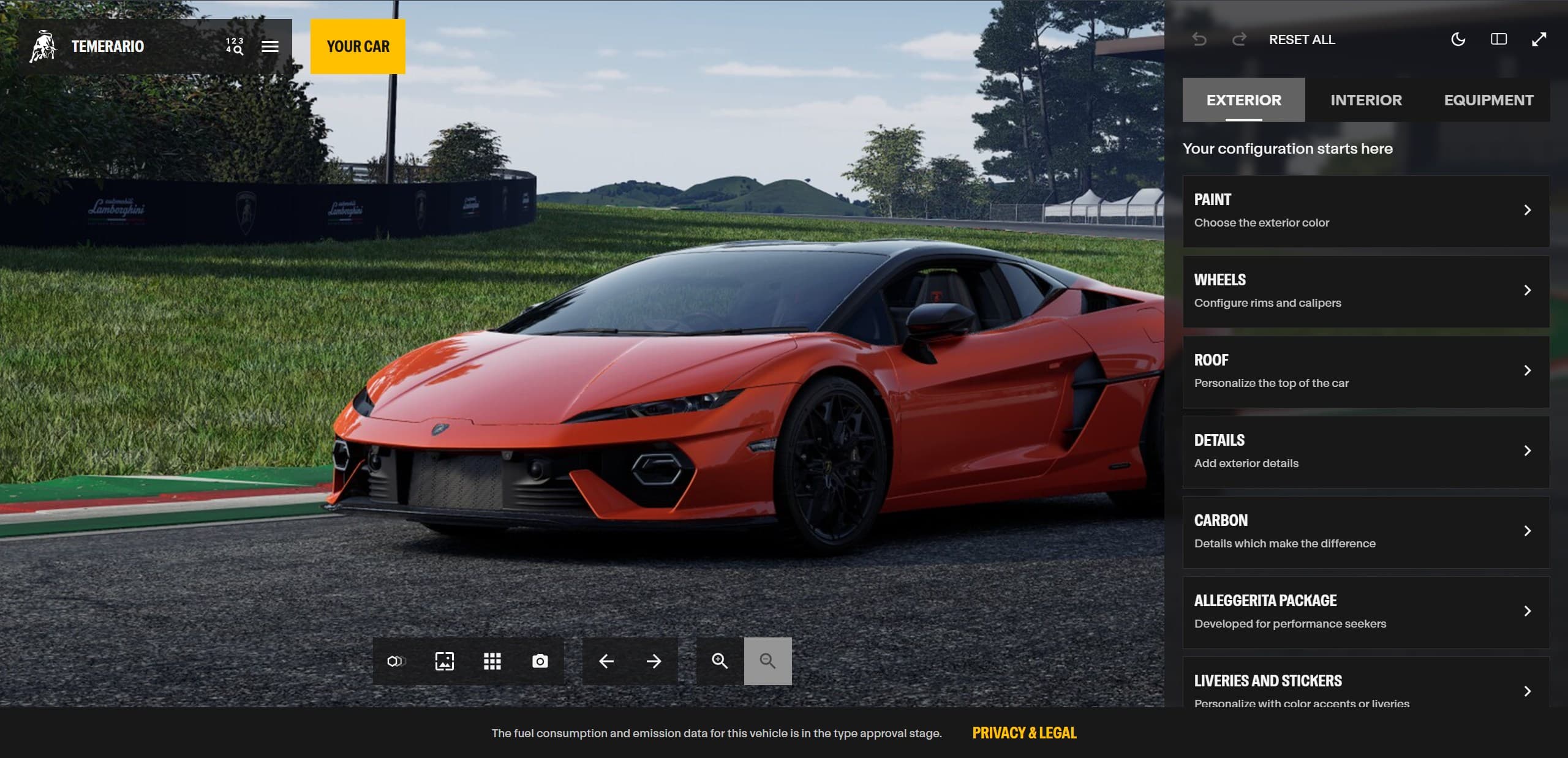
Lamborghini Ad Personam Configurator
Lamborghini
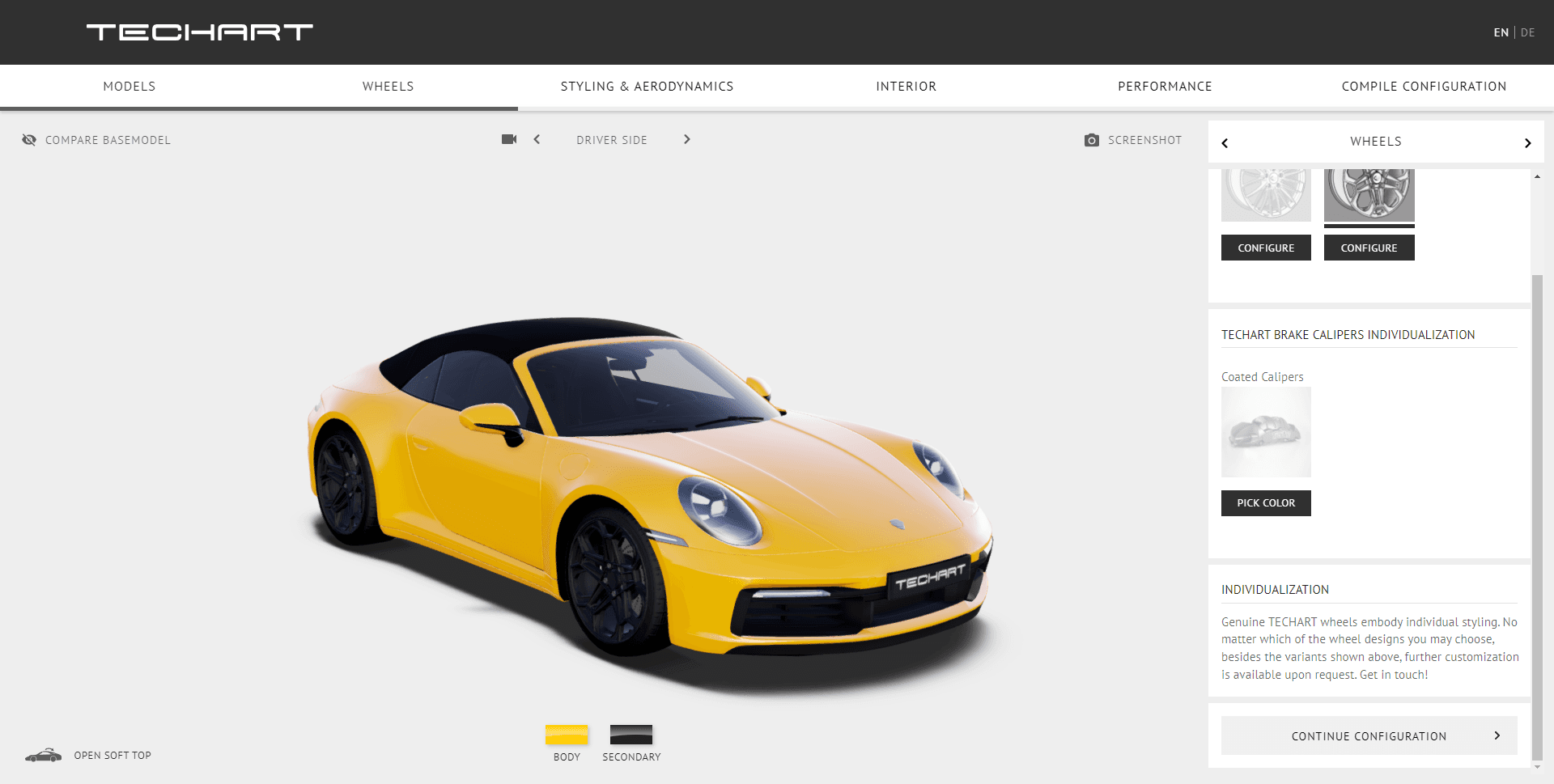
Techart Porsche 3D Configurator
 Techart
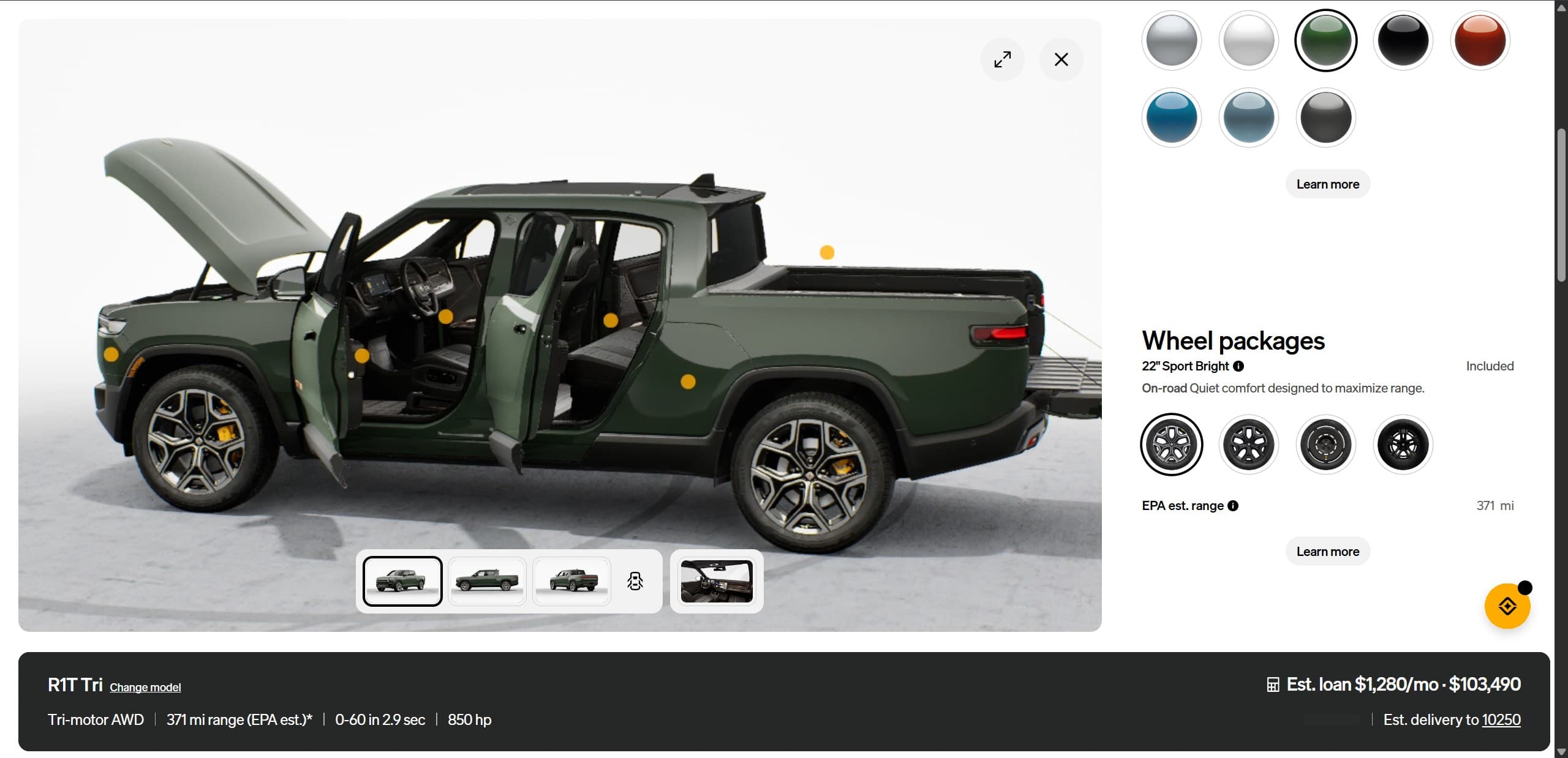
Rivian R1T/R1S Configurator
 Rivian
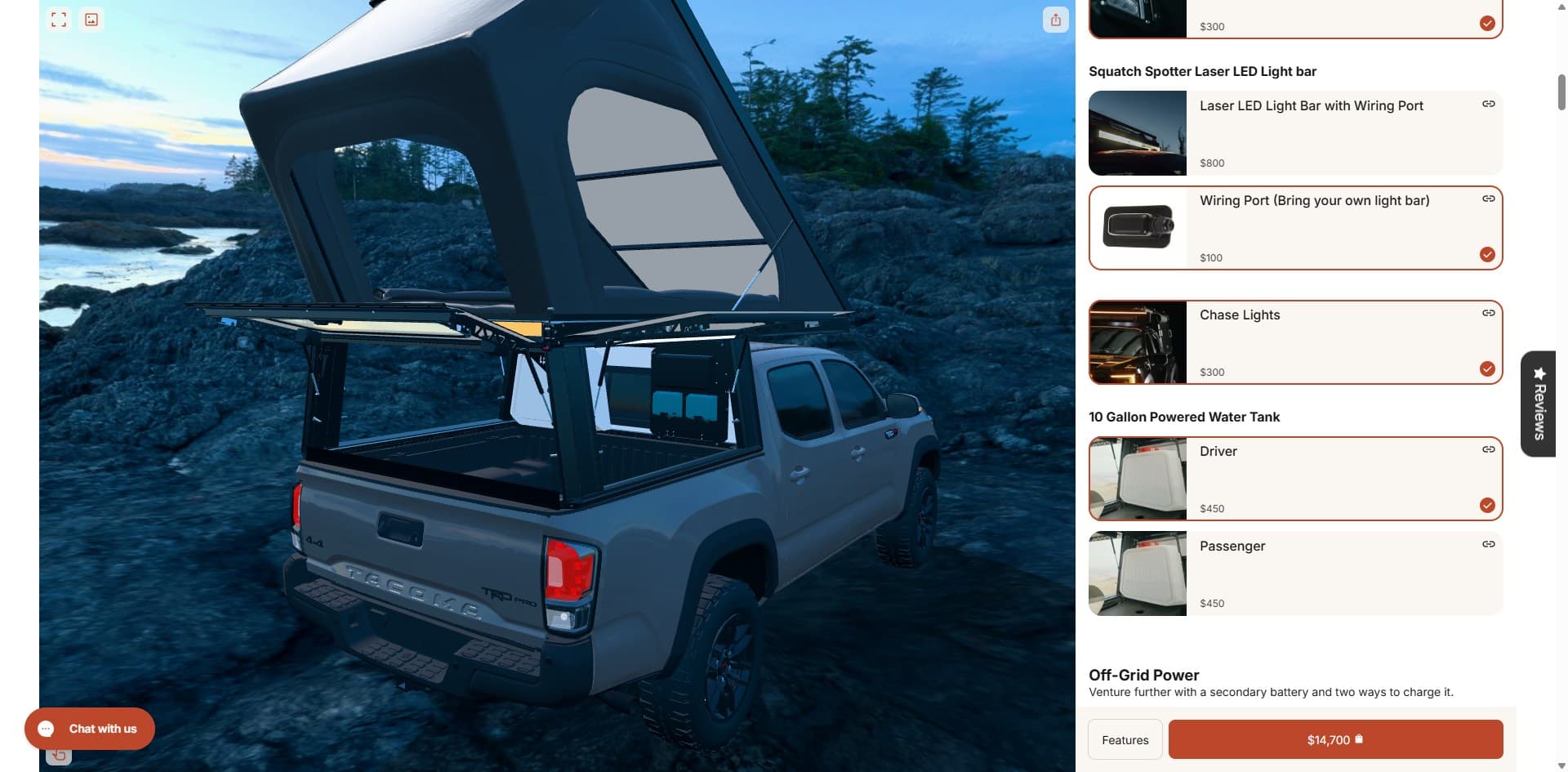
Lone Peak Truck Camper Bed 3D Configurator
Lone Peak Overland
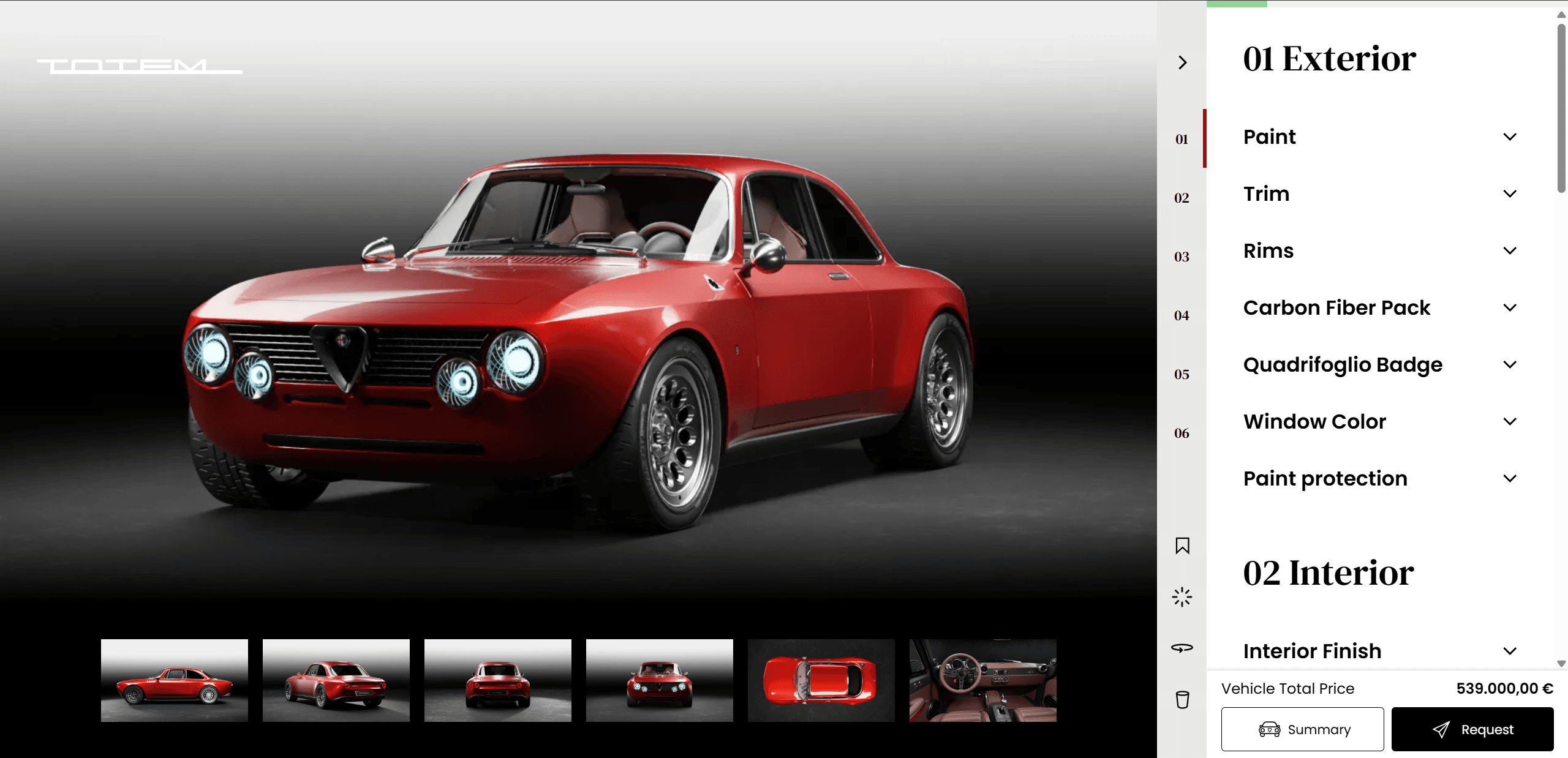
TOTEM Car Configurator
TOTEM
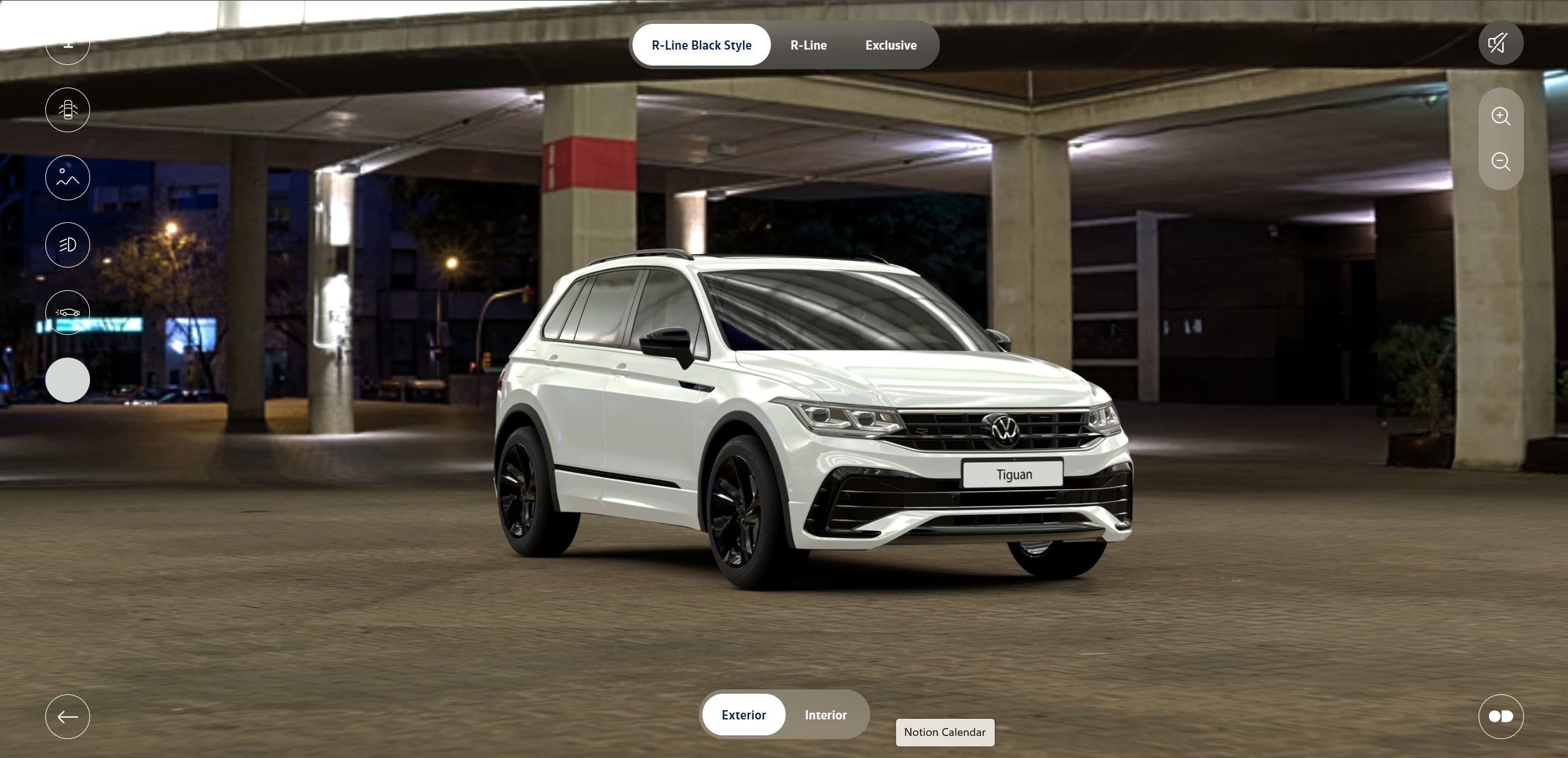
Car Demo 3D Interactive Showroom
Outside Digital
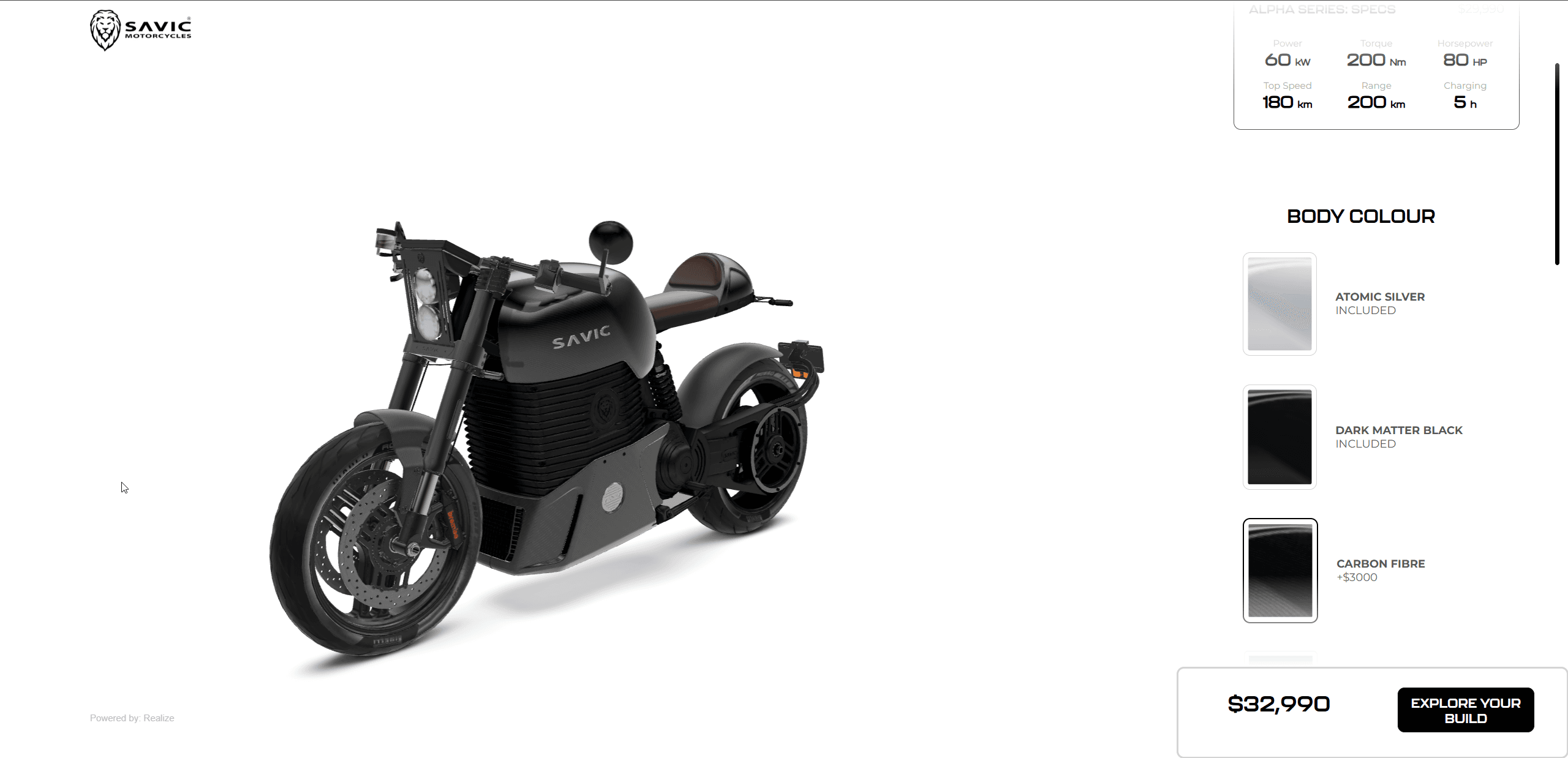
SAVIC Motorbike 3D Configurator
 SAVIC Motorcycles
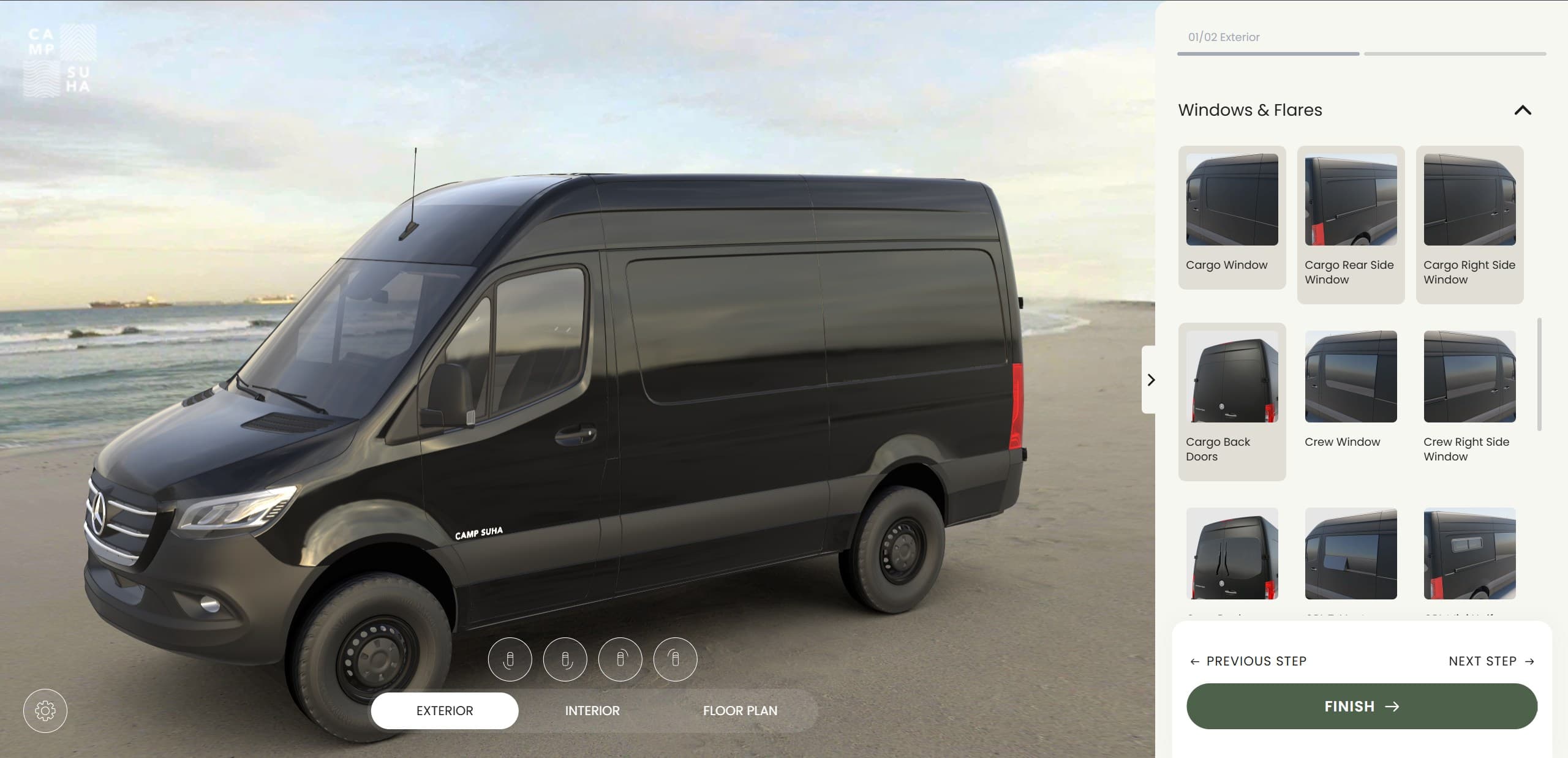
Campsuha Van 3D Configurator
Campsuha
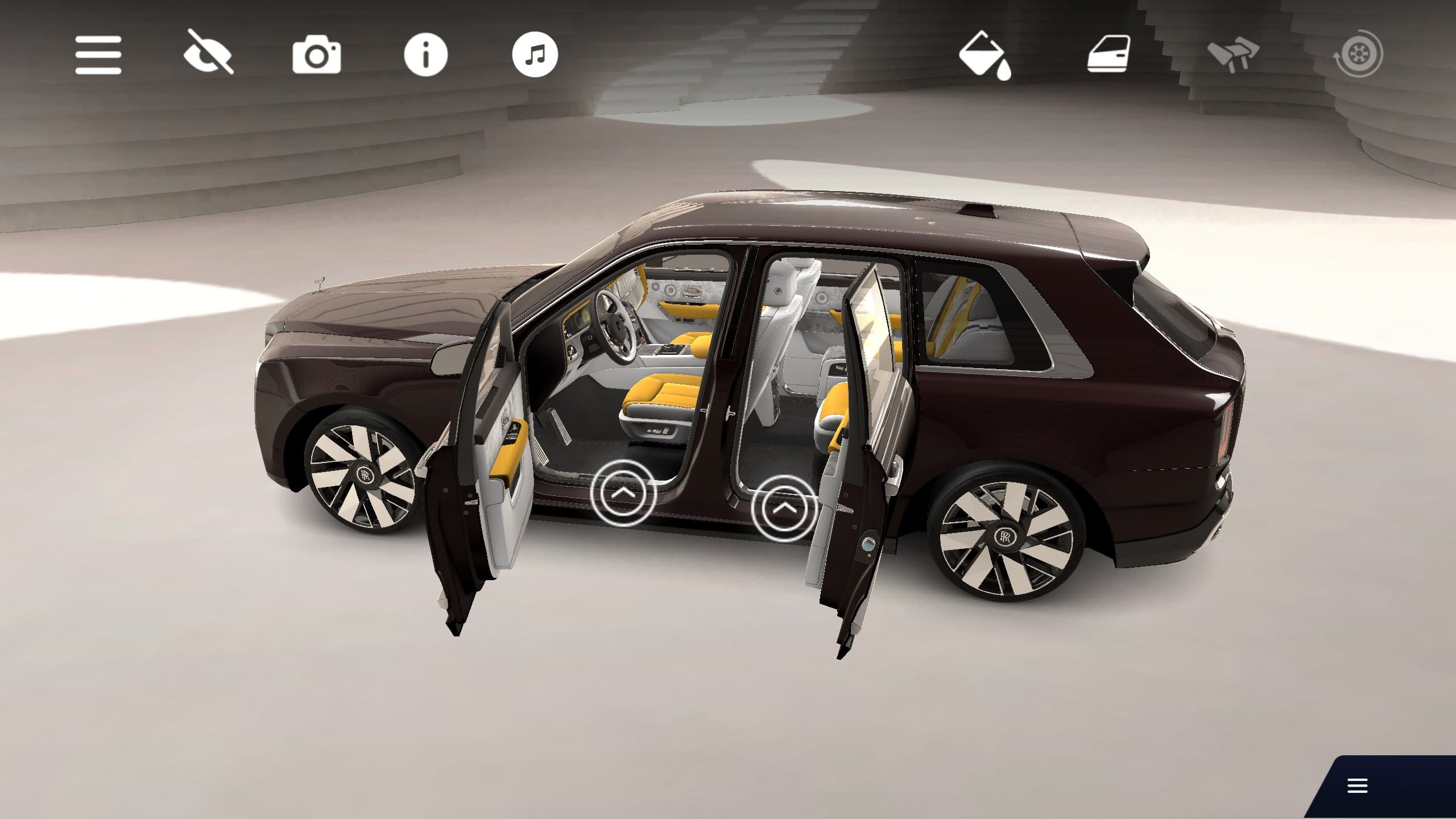
Formacar 3D Car Configurator
Formacar
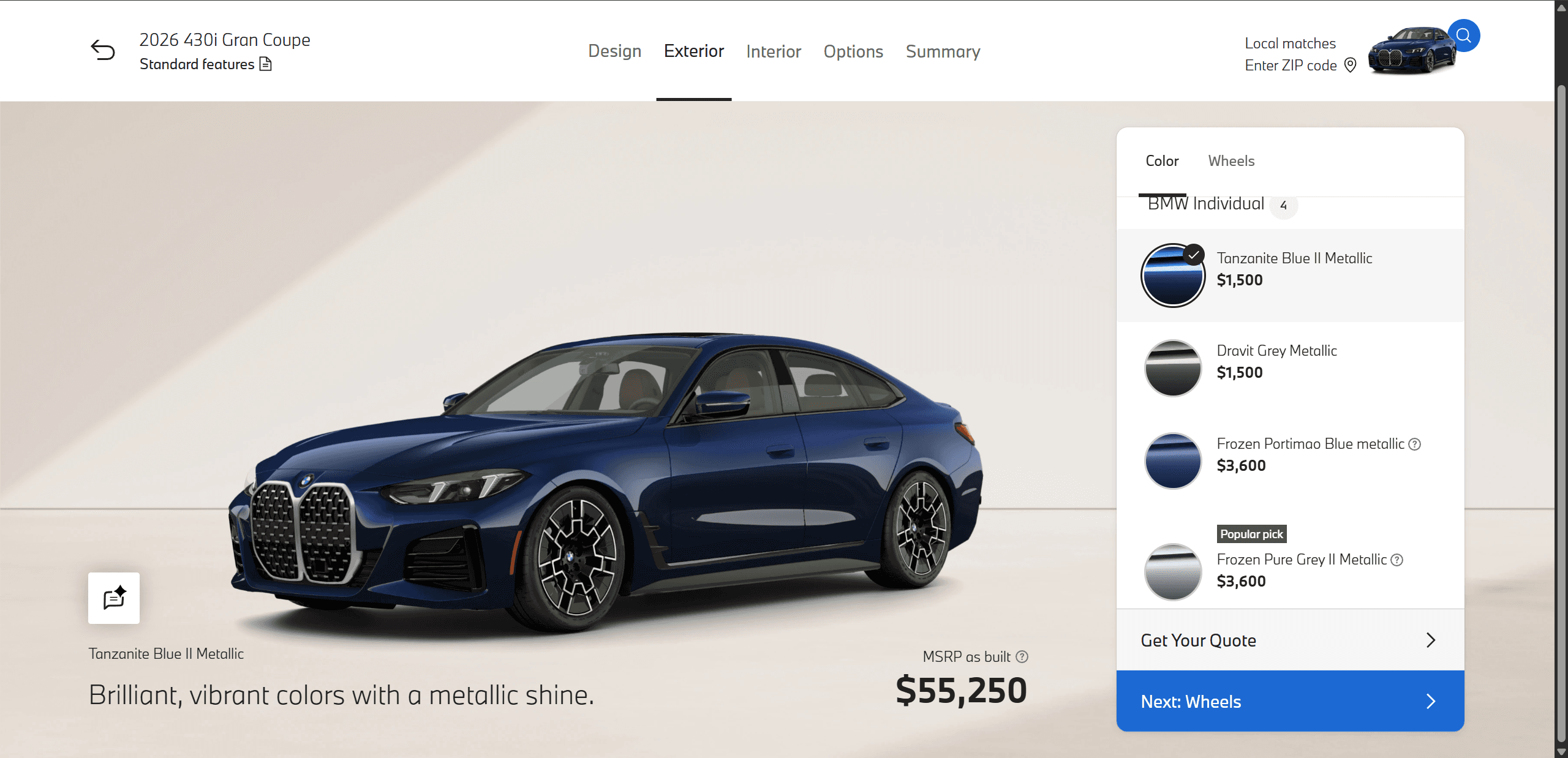
BMW Build Your Own
BMW
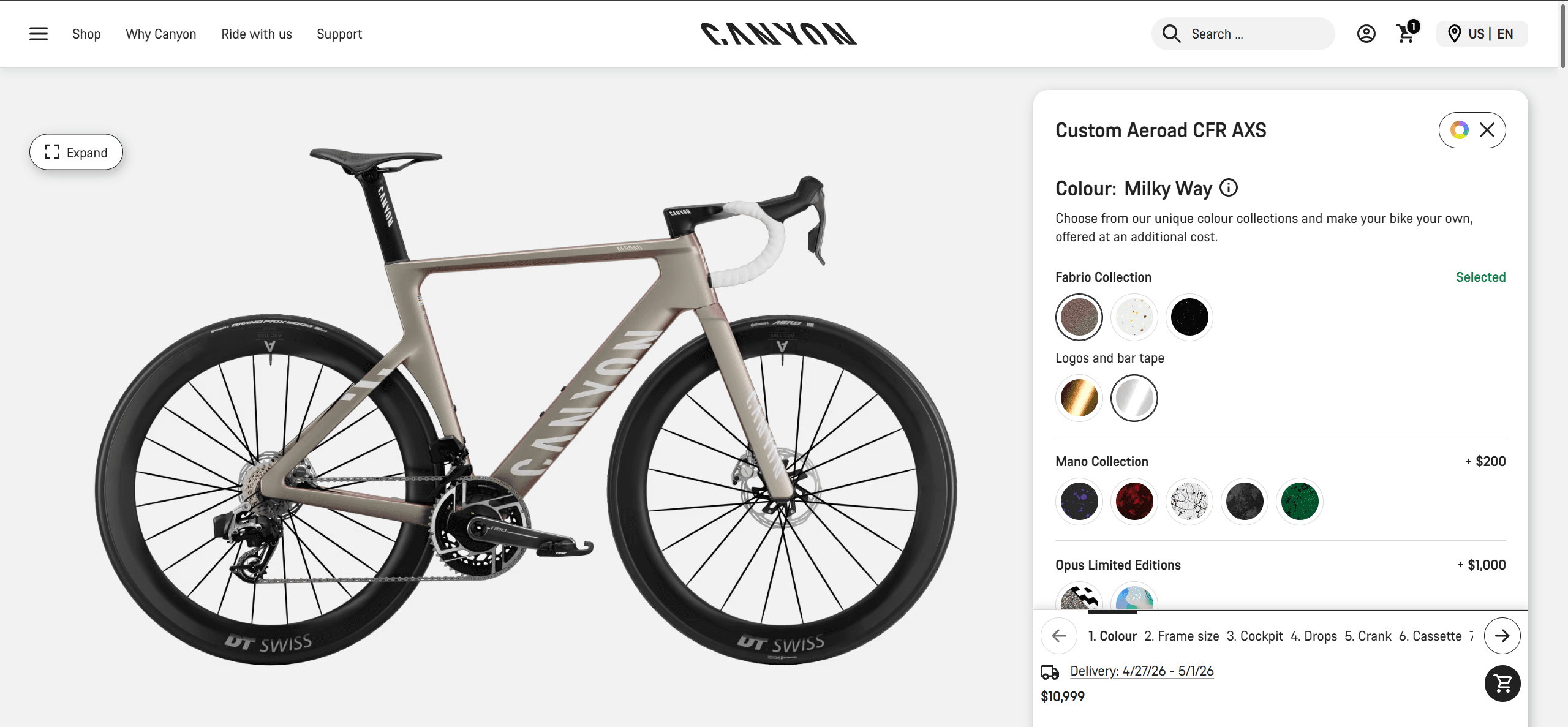
Canyon MyCanyon Bike Customizer
Canyon
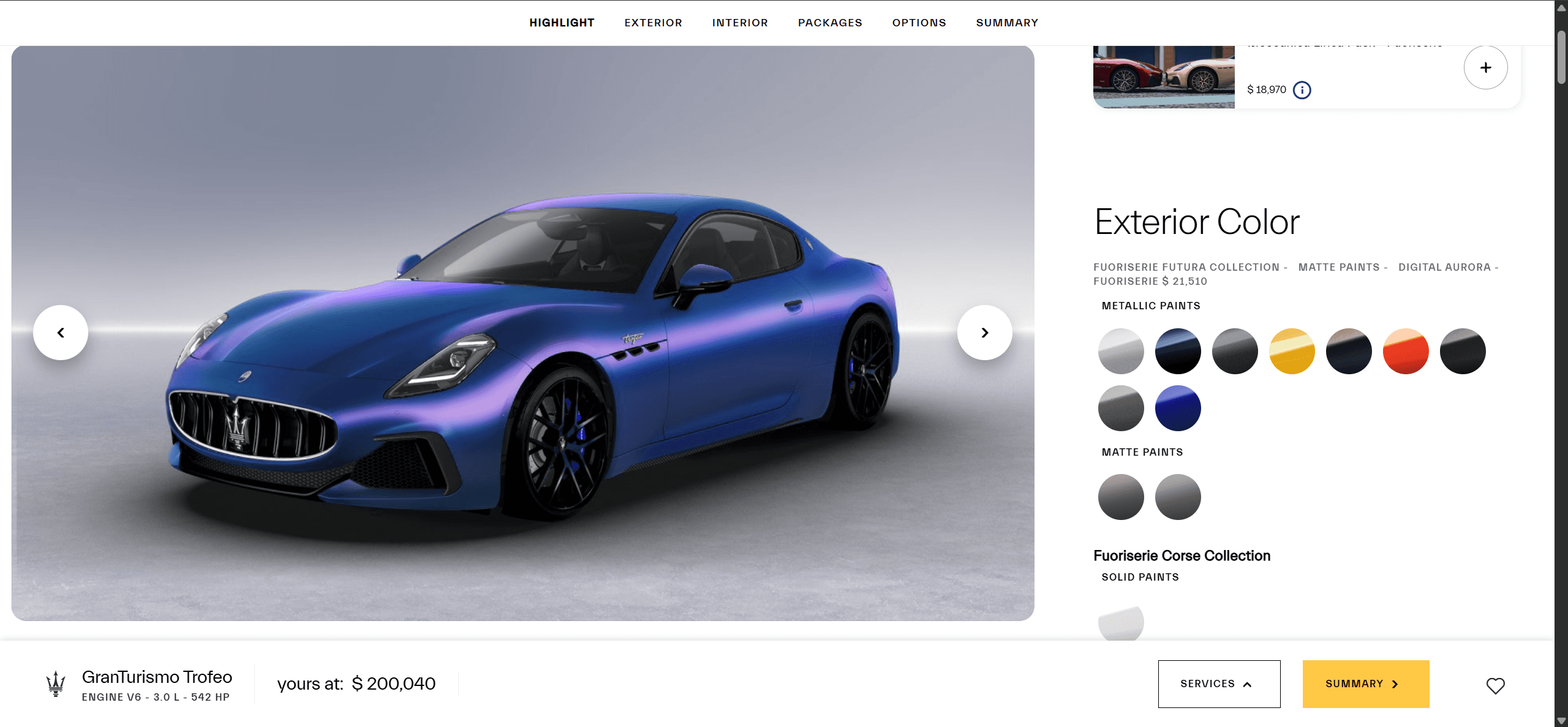
Build Your Maserati 2D Configurator
Maserati
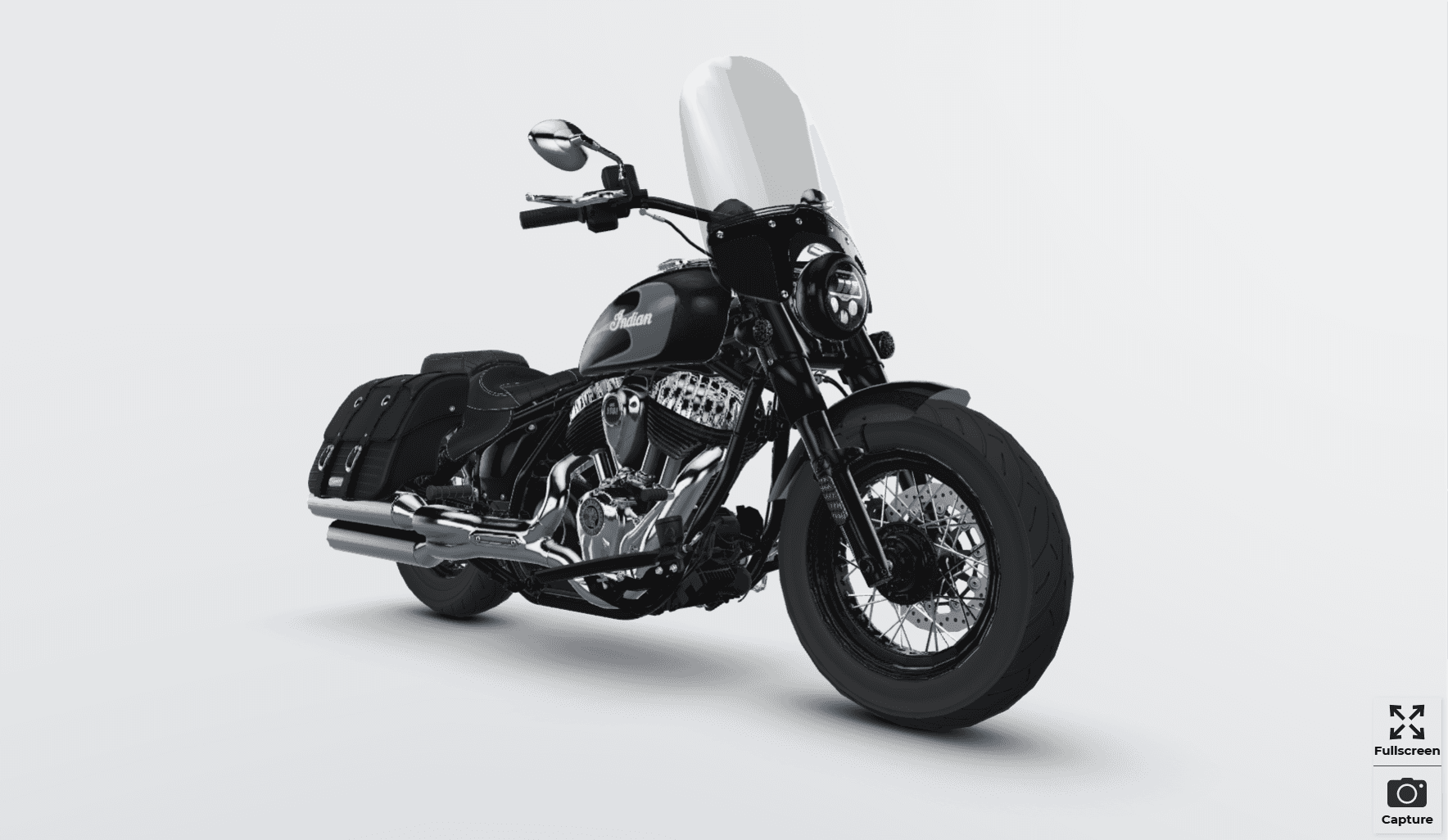
Indian Motorcycle 3D Configurator
Indian Motorcycle
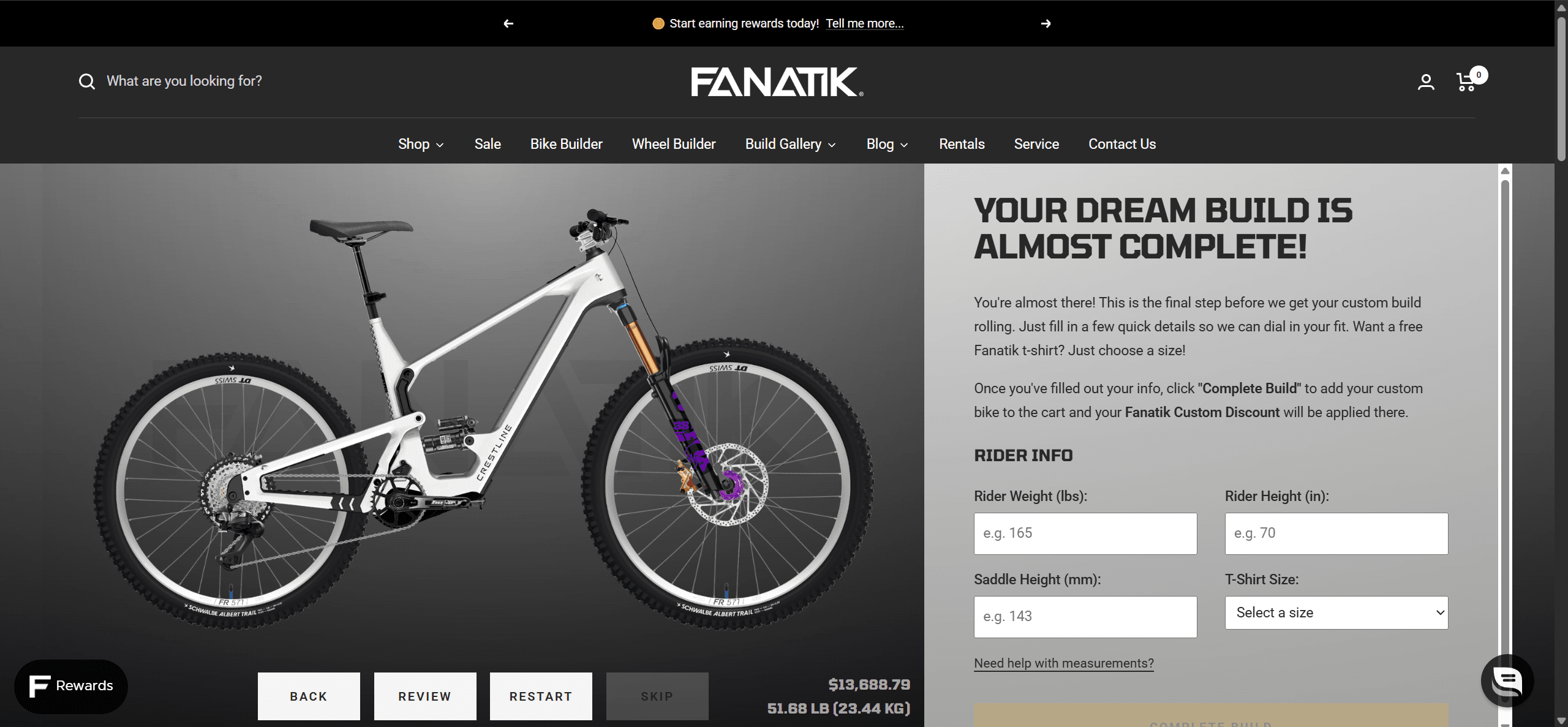
Fanatik Custom Mountain Bike 3D Builder
Fanatik

Lotus Pixel Streaming & 2D Configurators
 Lotus
Lotus
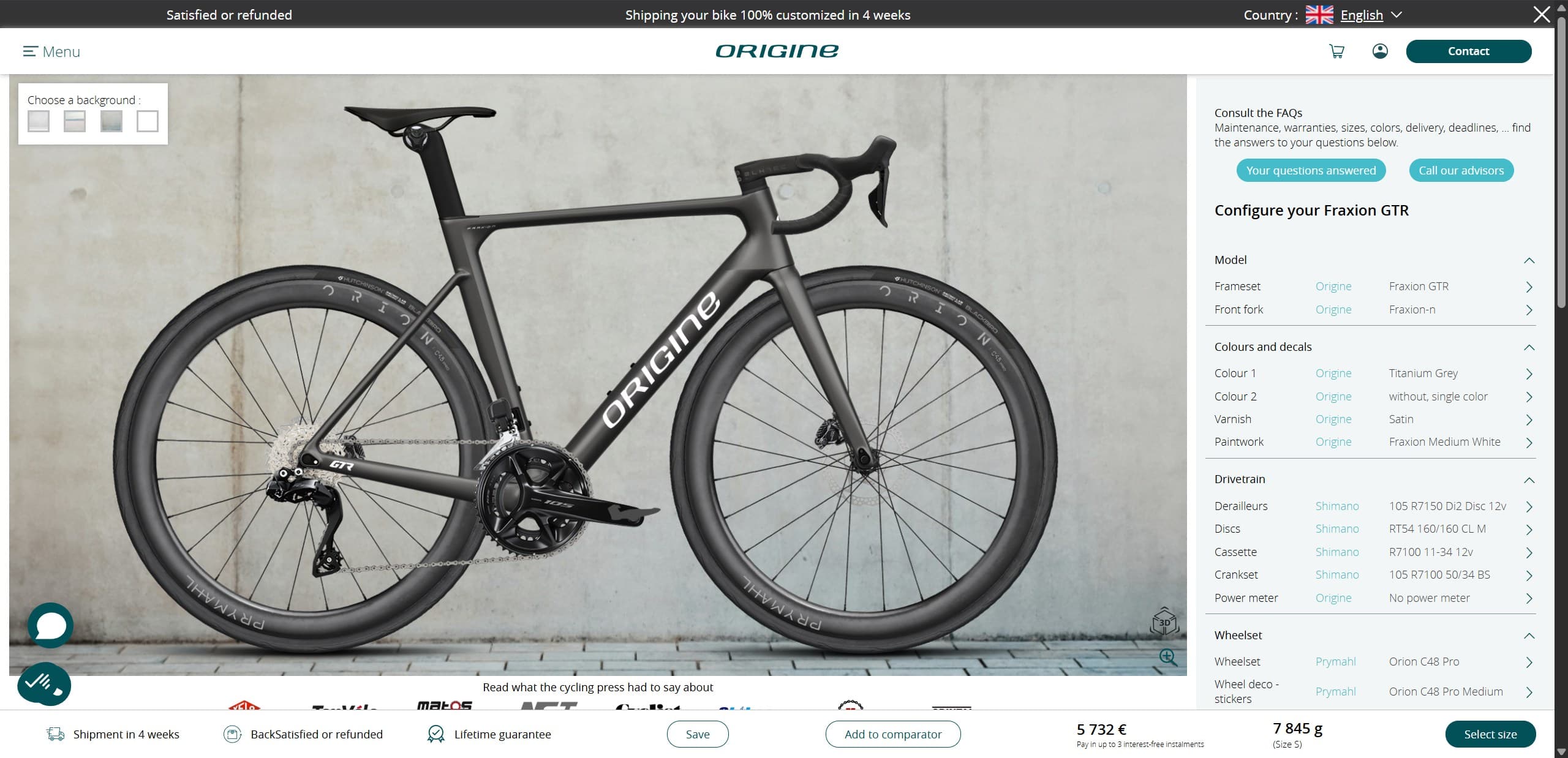
Origine Cycles Bicycle Configurator
 Origine Cycles
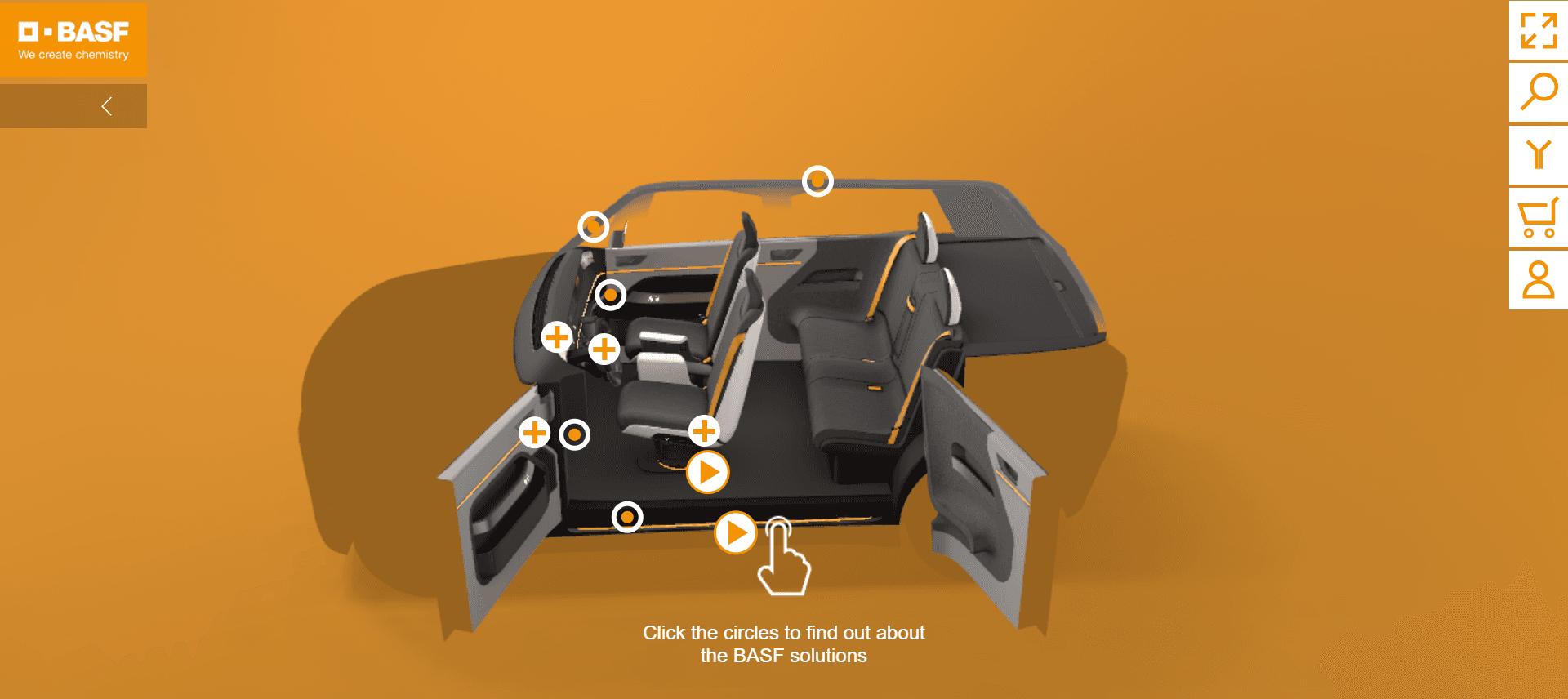
Basf Car 3D Interactive Presentation
BASF
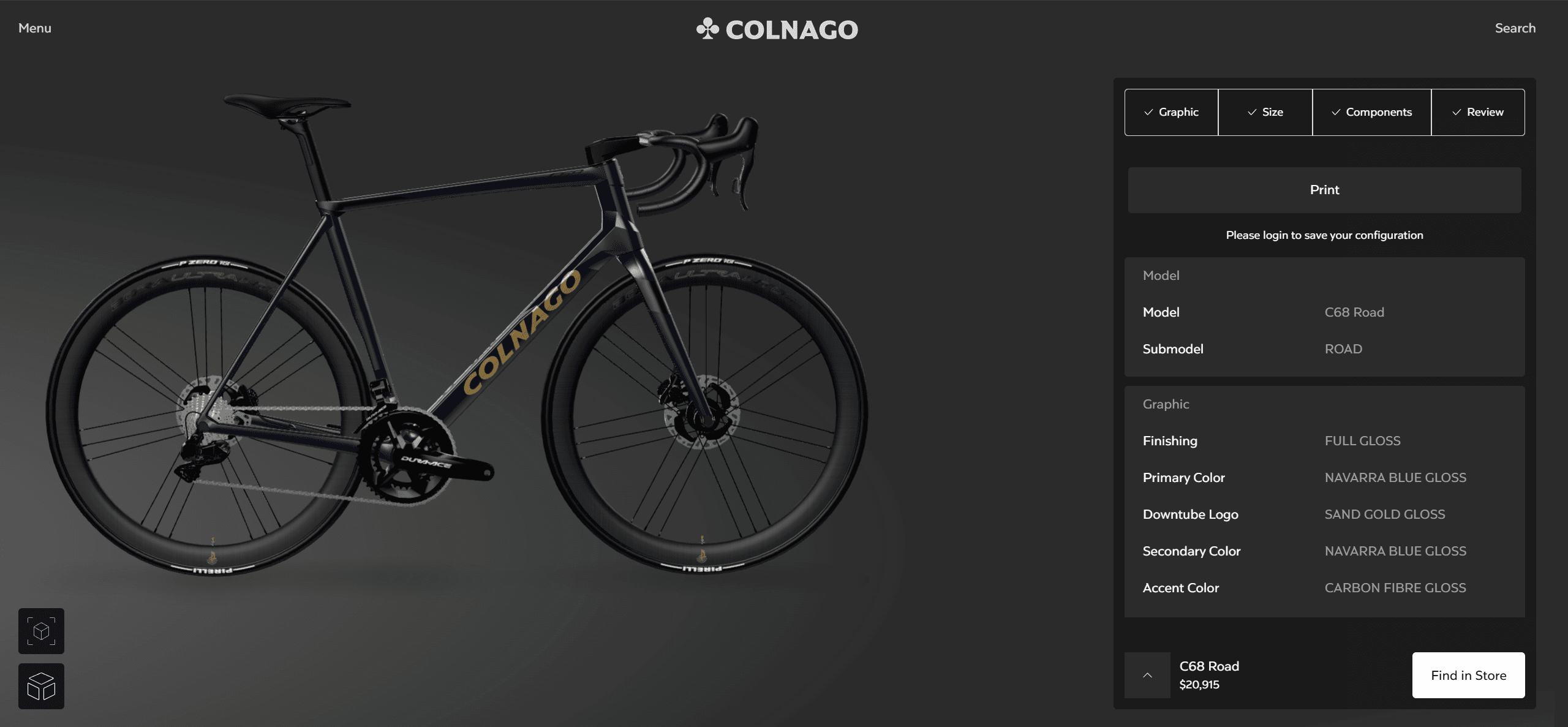
Colnago Bike 3D Customizer
Colnago
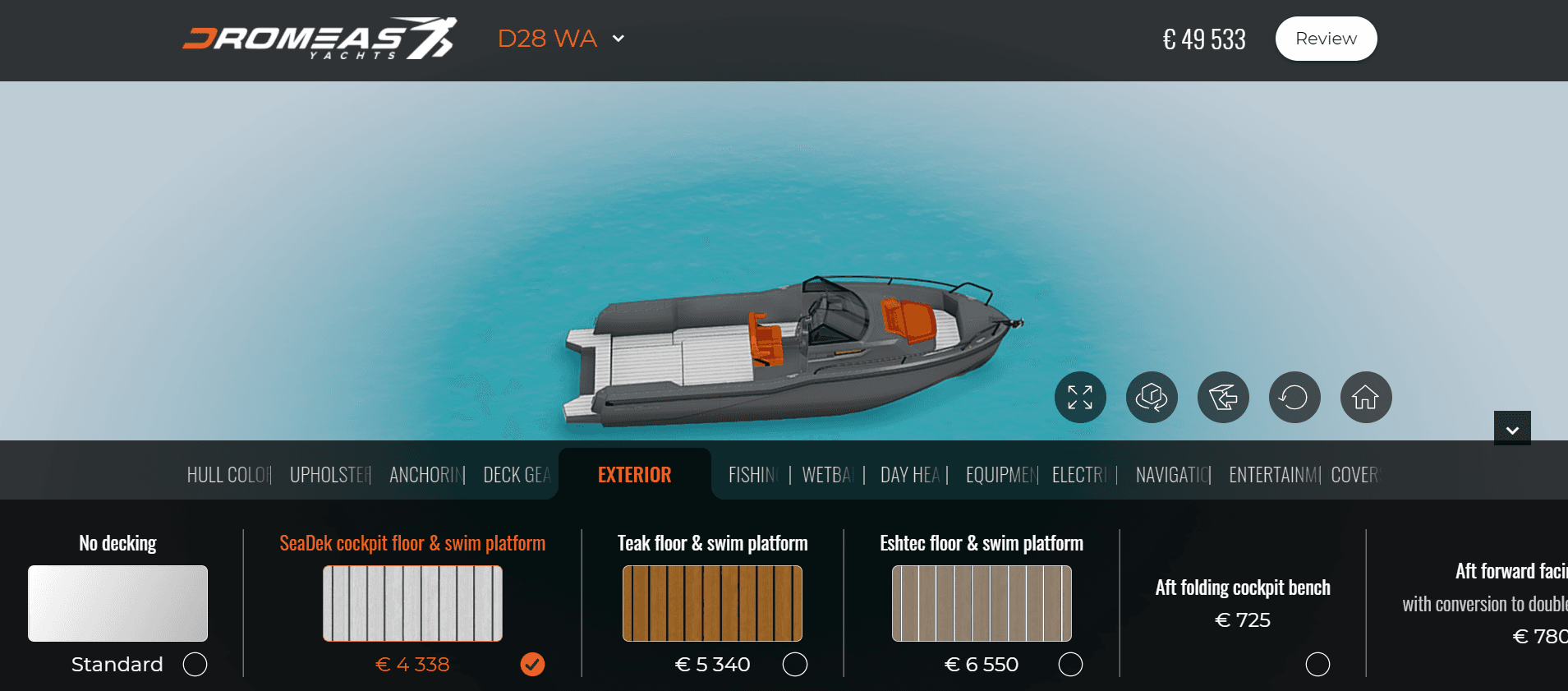
Dromeas Yachts 3D Configurator
Dromeas Yachts
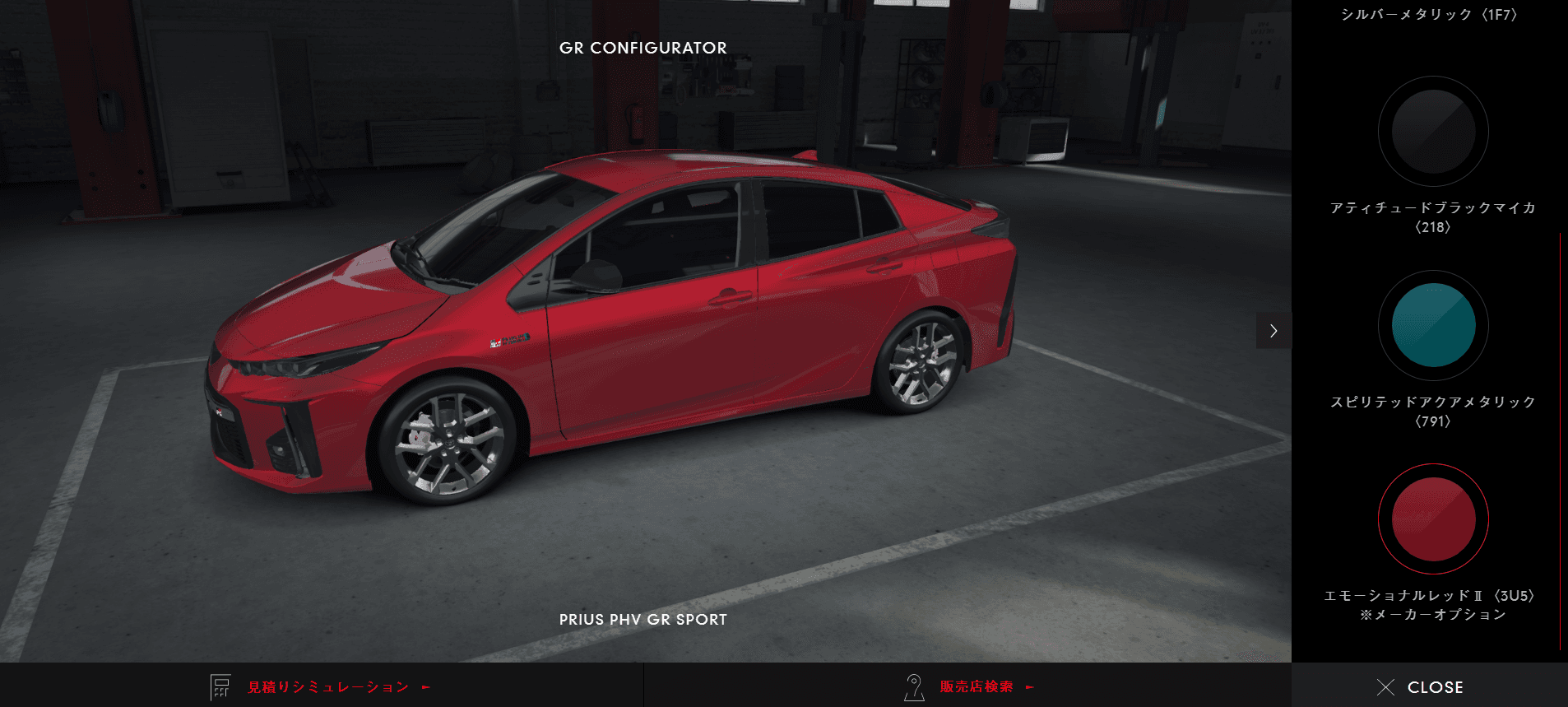
Toyota Gazoo Racing 3D Configurator
 Gazoo Racing